
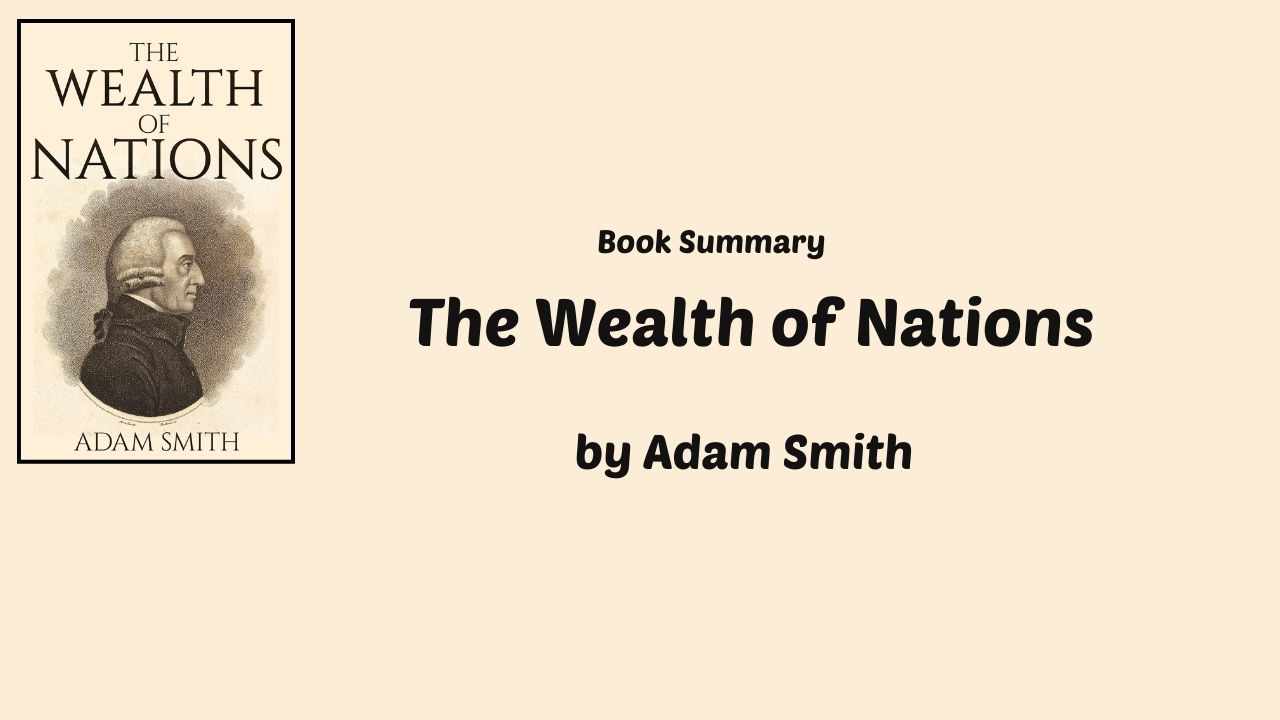
Summary of Adam Smith’s “The Wealth of Nations”#
Published in 1776, “The Wealth of Nations” is a foundational text in economics, written by Scottish philosopher and economist Adam Smith. The book is considered one of the most influential works on economics and politics in the history of ideas.
Book Overview:
“The Wealth of Nations” consists of five books:
- Introduction: Book I discusses the nature of economic growth and the role of government.
- Division of Labor and Productivity: Book II explores the benefits of specialization, trade, and division of labor.
- Markets and Prices: Book III examines the functioning of markets, including supply and demand, competition, and price determination.
- The Nature and Causes of Wealth: Book IV discusses the concept of wealth and its relationship to economic growth.
- Justice and Property Rights: Book V addresses issues related to property rights, social justice, and government policy.
Key Concepts:
- Division of Labor: Smith argues that specialization leads to increased productivity and economic efficiency.
- Invisible Hand: The invisible hand refers to the tendency for individuals acting in their own self-interest to create socially beneficial outcomes.
- Market Forces: Smith advocates for the use of market forces, such as supply and demand, to regulate economic activity.
- Laissez-Faire Economics: The book promotes a minimalist approach to government intervention in economic matters.
- The Role of Government: Smith argues that governments should focus on protecting property rights, enforcing contracts, and maintaining public order.
Key Arguments:
- Economic Growth: Smith argues that economic growth is driven by innovation, trade, and specialization.
- Market Efficiency: He advocates for market forces to regulate economic activity, rather than relying on government intervention.
- Wealth Creation: Smith defines wealth as the accumulation of material goods and services.
- Social Welfare: He argues that economic growth leads to increased social welfare and prosperity.
Influence and Legacy:
“The Wealth of Nations” has had a profound impact on modern economics, politics, and society. Its ideas have influenced:
- Classical Economics: Smith’s work laid the foundation for classical economics.
- Capitalism: The book is often seen as a justification for capitalism and the free market.
- Free Trade: Smith advocated for free trade and the reduction of tariffs.
- Government Policy: His ideas have influenced government policy, particularly in regards to taxation, regulation, and social welfare.
Criticisms and Controversies:
- Lack of Social Concerns: Some critics argue that Smith’s focus on individual self-interest ignores social concerns, such as poverty and inequality.
- Colonialism and Imperialism: The book has been criticized for its views on colonialism and imperialism, which some see as justifying the exploitation of colonized peoples.
- Limited Scope: Some argue that Smith’s work is limited in scope and does not fully consider alternative economic systems or social structures.
Conclusion:
“The Wealth of Nations” remains a foundational text in economics and politics, with its ideas continuing to shape modern economic thought. While it has faced criticisms and controversies, the book remains an important contribution to the development of classical economics and capitalist theory.

Comments: